





|
Quantity
|
Out of stock
|
||
|
|
|||
Knitting Needles – The Essential Tool for Every Knitter
Knitting needles are the cornerstone of every knitter’s toolkit. While their design may seem simple, knitting needles have evolved from primitive wooden sticks into ergonomic, high-performance tools made from advanced materials.
A Brief History of Knitting Needles
The first knitting needles appeared thousands of years ago. Archaeologists have found early versions in Ancient Egypt, China, and the Roman Empire. They were originally made of bone, wood, or metal. By the 19th century, knitting became a popular hobby, prompting the industrial production of modern needles.
How Knitting Needles Are Made
Modern needles are crafted with precision. Metal, wood, bamboo, or plastic bases are polished until smooth, often coated (e.g., with Teflon) for easy yarn gliding, and marked with exact sizes. High-quality needles undergo strict quality checks to ensure a smooth and enjoyable knitting experience.
Materials Used in Knitting Needles
Common materials include:
-
Metal – strong and durable, perfect for slippery yarns.
-
Wood – warm to the touch and slip-resistant, ideal for beginners.
-
Bamboo – eco-friendly, flexible, and smooth.
-
Plastic – lightweight and affordable, often used for larger needles.
Choose material based on the yarn, your project, and personal preference.
Types of Knitting Needles
There are several main types:
-
Straight needles – classic choice for flat pieces.
-
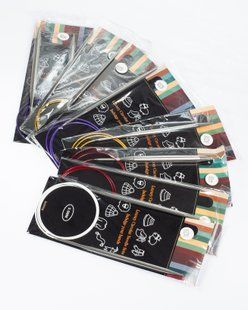
Circular needles – connected by a flexible cord; great for knitting in the round or flat.
-
Double-pointed needles (DPNs) – a set of short needles used for socks, mittens, and small items.
-
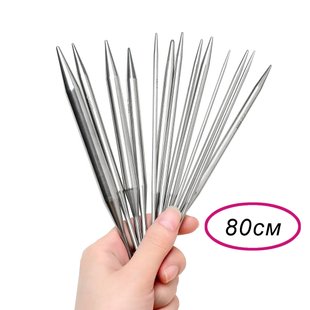
Interchangeable needles – tips that screw onto cables of various lengths.
How to Choose the Right Knitting Needles
Consider the following:
-
Yarn weight – usually indicated on the yarn label.
-
Project type – DPNs for socks, circular for sweaters.
-
Skill level – beginners often prefer bamboo or wooden needles for better grip.